
 Email Us
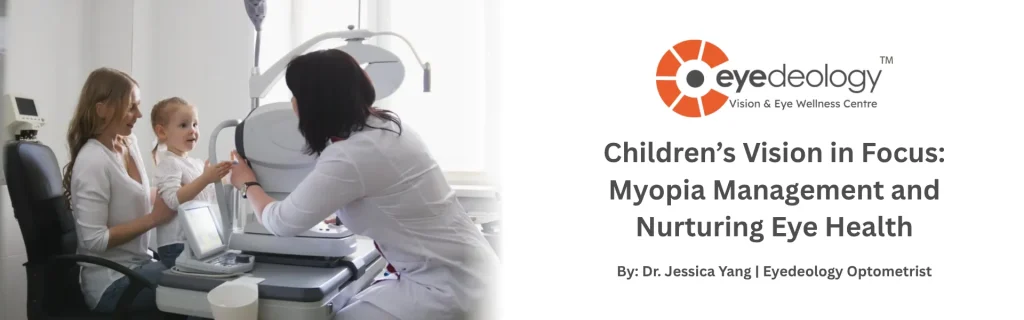
By: Dr. Jessica Yang | Eyedeology Optometrist
We live in a world dominated by screens. From smartphones to laptops, children are spending more time indoors and on digital devices than ever before. While technology brings convenience, it has also contributed to a growing concern: the rapid rise of myopia.
Myopia, or nearsightedness, occurs when the eye grows too long relative to its focusing power, causing light to focus in front of the retina instead of directly on it. As a result, distance vision appears blurry. Myopia typically develops during childhood and often progresses through the teenage years.
Over the past few decades, myopia has reached near-epidemic levels, particularly in urban areas where screen time is high and outdoor time is limited. The World Health Organization estimates that nearly 30% of the global population was myopic in 2020, with projections rising to 50% by 2050. This trend highlights the importance of early detection and intervention.
Myopia is more than an inconvenience requiring glasses. Higher levels of myopia are associated with increased risks of serious eye conditions later in life, including cataracts, glaucoma, retinal detachment, and myopic macular degeneration. Slowing myopia progression in childhood can significantly reduce these long-term risks.
This is where myopia management plays a critical role. Unlike traditional single-vision glasses or contact lenses that simply correct blurry vision, myopia management strategies aim to slow the progression of nearsightedness while providing clear vision. Options may include low-dose atropine eye drops, specialty spectacle lenses, soft daily disposable myopia-control contact lenses, and orthokeratology (overnight retainer contact lenses that gently reshape the cornea). Early intervention offers the greatest benefit.
Comprehensive eye examinations are an essential part of preventive health care. In Alberta, a portion of the annual eye exam is covered for children under 19. Because 80% of learning is visual, undetected vision problems can affect academic performance, attention, and confidence.
Regular visits to an eye care professional can:
- Detect myopia and other eye conditions early
- Ensure prescriptions are accurate and up-to-date
- Provide individualized myopia control strategies
- Monitor eye health and reduce the risk of future complications
There are several ways to support your child to have healthy eye habits at home. Research shows that increased outdoor time helps reduce the risk of developing and progressing myopia. Aim for at least two hours of outdoor activity daily, weather permitting. Adequate sleep is equally important for overall health and eye development. Turning off screens at least one hour before bedtime and ensuring children get 9–11 hours of sleep per night can make a meaningful difference.
To help manage screen exposure, the Canadian Pediatric Society recommends:
- Under age 2: No screen time
- Ages 2–5: Limit to one hour per day of high-quality programming
- Age 5 and older: Set consistent limits to protect sleep and physical activity
In today’s screen-focused world, proactive eye care has never been more important. Through regular eye examinations, evidence-based myopia management, and healthy daily habits, we can protect children’s vision and support their long-term eye health.

Biography
Dr. Jessica Yang is an optometrist practicing at Eyedeology in the Rockyview Health Centre Building #1 in Calgary. She has a special interest in myopia management, Dry Eye Disease, and specialty contact lenses. For more information about our Myopia Academy visit www.eyedeology.ca. Dr. Yang is currently accepting new patients of all ages. Please email [email protected] or call 587-353-5061 for availability.



 587-353-5061
 1 (587) 409-1700