Email Us
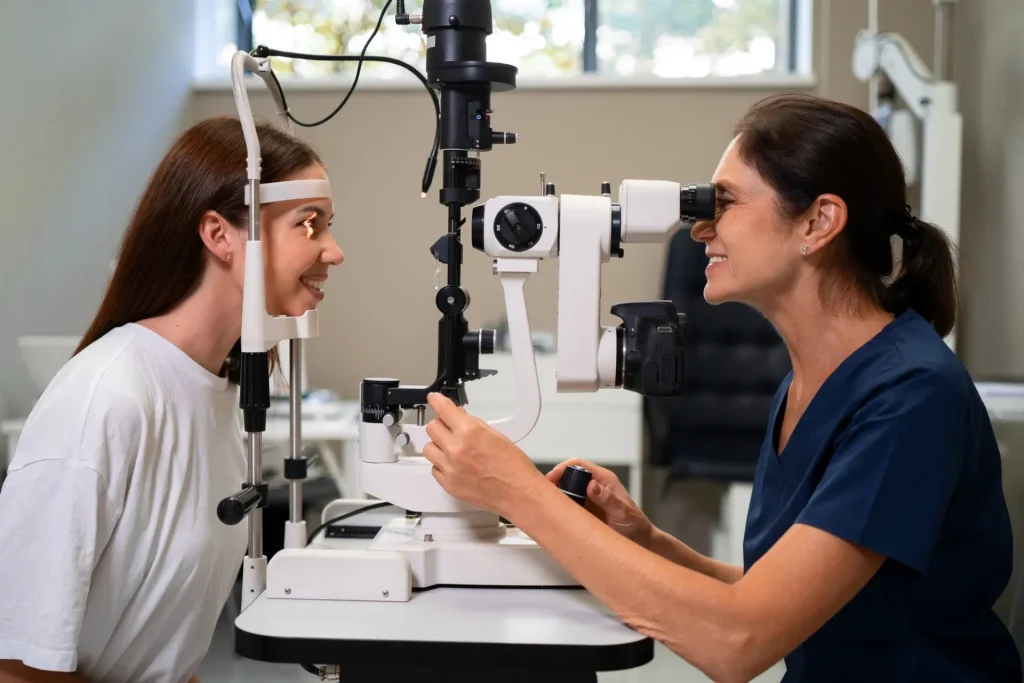
An infant eye exam provided answers, early intervention, and a stronger foundation for a child’s future.
When Alyssa brought her son Noah in for an infant eye exam before he was six months old, she expected a routine checkup. Instead, the appointment became one of the most important decisions she would make for his development and overall health.
“That early exam changed everything,” says Alyssa. “It gave us clarity, direction, and the ability to support him at a stage when it truly mattered most.”
The exam identified a vision condition that might not have been detected until school age. By then, the impact on Noah’s vision could have been significant.
“Without catching his eye condition early, there is a strong chance his vision could have been significantly compromised in one or both eyes,” says Alyssa. “It may not have been detected until school age, which would be right about now.”
For Alyssa, the experience highlighted something many parents may not realize.
“As parents, we are consistently guided to check hearing, track milestones, and monitor growth, but eye health often is not emphasized in the same way by non-optometry professionals like pediatricians or hospitals,” she says.
Fortunately, the early exam provided an opportunity to identify the issue and begin supporting Noah’s visual development at a critical stage.
“Early awareness gave us a window to act, not react, and that made a meaningful difference in his long-term outcomes,” says Alyssa.
Under the care of Dr. Farrah Sunderji, a Calgary Optometrist, Noah received ongoing support and treatment tailored to his needs. Early intervention enabled his family to act while his visual system was still developing, creating opportunities that might not have been possible later.
Today, Noah is thriving. His prescription has improved significantly, decreasing from +4.50 to +1.50, and he no longer requires glasses full-time. He now only wears them when reading a book or watching something. As he begins reading, his family continues to work closely with therapists and other health professionals to build on the strong foundation established through early intervention.
Looking back, Alyssa says the impact of that first eye exam went far beyond eyesight alone.
“That one simple, early exam did not just check a box,” she says. “It helped shape his development in a powerful way that we wouldn’t have known otherwise.”
The family also learned something unexpected along the way. Noah’s vision condition was affecting other aspects of his development, including his jaw and airway.
“Having that awareness early helped us connect dots we otherwise would not have associated with vision,” says Alyssa. “It gave us a more complete understanding of his development and allowed us to take a more integrated approach to his care.”
Because the issue was identified early, the family was able to explore and support areas beyond his eyesight, including his mouth and airway, in a more informed and proactive way.
Alyssa credits much of Noah’s progress to the care and dedication he received.
“We give all the credit to Dr. Farrah Sunderji for being on top of it for us and trying new, innovative ways to continue supporting his eyes,” she says.
Stories like Noah’s demonstrate why infant eye exams are so important. Many vision conditions have no obvious signs or symptoms, making them difficult for parents to detect on their own. Early identification allows families to intervene when it can make the greatest difference.
“Many parents assume they would know if their child had a vision problem, but that is often not the case,” says Dr. Farrah Sunderji. “Vision is more than a sense. It is a learned process that develops as children interact with their environment and as the eyes and brain learn to work together. While eyesight refers to how clearly a child can see, vision includes the skills needed to process, understand, and respond to the world around them. Because children often assume everyone sees the way they do, they may not recognize or communicate that something is wrong.”
“Infant eye examinations allow us to identify concerns early, often before a child can communicate that something is wrong. The earlier we identify a problem, the greater our ability to support healthy visual development and provide the foundation children need for learning, movement, and success throughout life.”
For Alyssa, the message to other parents is simple.
“If you’re considering an infant eye exam, do it,” she says. “That one appointment gave us answers, helped us understand our son’s needs, and allowed us to support him in ways we never would have known otherwise.”
One simple eye exam gave this family answers, a plan, and a stronger foundation for Noah’s future. Early detection allowed them to act when it mattered most, demonstrating how a routine eye exam can make a lasting difference in a child’s life.
If it’s been more than a year since your child’s last comprehensive eye exam, or if they’ve never had one, now is the time to book an appointment with your Doctor of Optometry. It’s a simple step that can have a lifelong impact on your child’s vision, learning, and development.
The Alberta Association of Optometrists recommends that infants receive their first comprehensive eye exam between six and nine months of age. Children should then have at least one eye exam between the ages of two and five, another at the start of kindergarten, and annual eye exams throughout their school years. Parents of kindergarten-aged children are also encouraged to take advantage of the Eye See…Eye Learn™ program. If an eye exam determines that a child needs glasses, a free pair is provided through participating optometry clinics. Routine eye exams throughout childhood help ensure vision problems are identified early, supporting healthy development, learning, and overall well-being.


 587-353-5061
 1 (587) 409-1700