Email Us

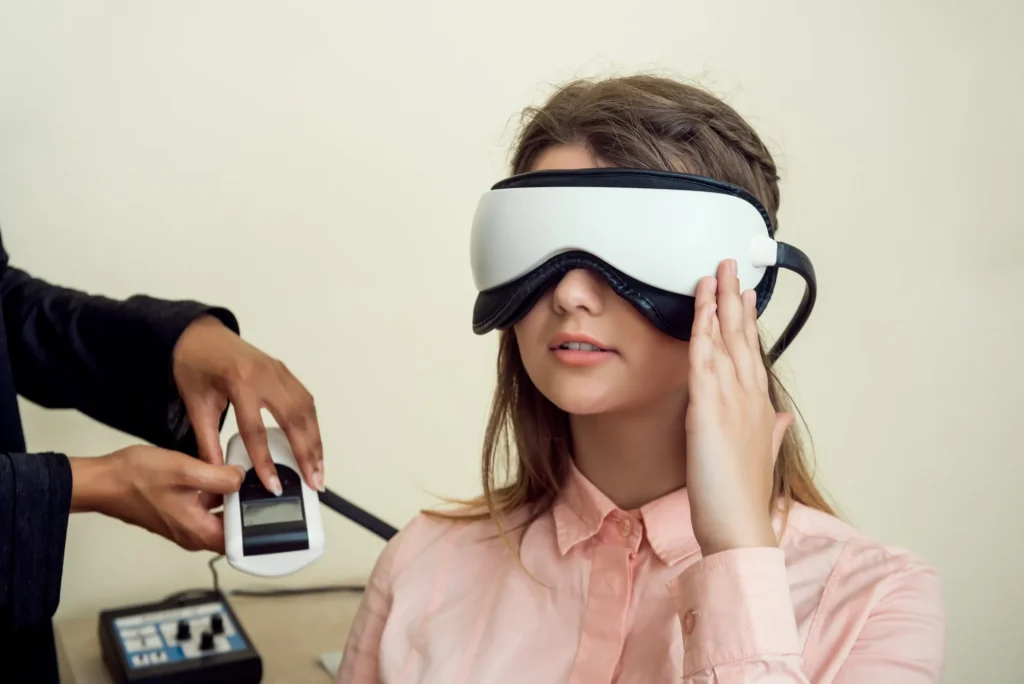
Vision therapy is a program of eye exercises designed to help eyes and the brain work together better. Many children struggle with reading and learning, but the problem may not be what they see—it could be how their eyes work. An optometrist in SW Calgary can evaluate your child’s vision and determine if vision therapy could help. Vision therapy in SW Calgary addresses eye movement problems, focusing issues, and coordination challenges that make learning harder. When vision works properly, children can read faster, understand better, and enjoy school more.
What Is Vision Therapy and How Does It Work?
The Basics of Vision Therapy
Vision therapy is not just an eye exam. It is a customized training program that strengthens the connection between your eyes and your brain. Think of it like physical therapy, but for your eyes. Vision therapy uses special exercises, activities, and sometimes computer programs to train your eyes to move smoothly and focus correctly. An eye clinic near you will create a plan tailored to your child’s specific needs. The exercises are designed to be fun and engaging, so children stay motivated during treatment.
Your eyes are like muscles. Just like you exercise to stay healthy, your eyes need exercise to work their best.
How Poor Vision Affects Learning
When children have vision problems, learning becomes much harder. If a child’s eyes do not track smoothly across a page, reading is slow and tiring. If eyes cannot focus quickly from the board to their paper, they miss information. If the eyes do not work together as a team, the brain struggles to process what it sees. These problems are invisible, so parents and teachers often think the child is not trying hard enough. Vision therapy fixes the actual problem, not just the symptoms.
Many children get blamed for not paying attention when really their eyes are not working properly.
Vision Problems That Impact Learning
Common Vision Issues in Children
Many children with learning difficulties have vision problems they do not know about. Convergence insufficiency happens when the eyes do not work together well when looking at close objects. This makes reading uncomfortable and causes words to blur or double. Tracking problems occur when eyes do not move smoothly across a page. Children with tracking issues lose their place while reading and re-read the same line. Focusing problems mean eyes cannot change focus quickly from far to near. This makes copying from the board frustrating and slow. Accommodation issues happen when eyes cannot adjust focus for different distances. Vision therapy in SW Calgary addresses each of these problems specifically.
How These Problems Show Up at School
Children with vision problems often show some signs. They may avoid reading because it claims that it hurts their eyes. Likewise, they may frequently lose their place, reverse letters or numbers, or struggle with math, especially. They may develop a headache while doing schoolwork or not pay attention when they are obviously trying. When the child truly requires assistance with vision, parents and teachers often misinterpret it as lazy behaviour or learning disabilities.
It is important to remember that many smart children have vision problems that make school harder.
How Vision Therapy Supports Children With Learning Difficulties
Improving Reading and Comprehension
When vision therapy corrects eye tracking and focusing, reading becomes easier and faster. Children who struggled to finish assignments can now complete their work in normal time. Reading comprehension improves because the brain is not working so hard just to process the visual information. Many children report that reading feels less like work and more like a normal activity. Vision therapy near you can unlock your child’s true reading potential.
When eyes work right, the brain has energy left over for understanding what it reads.
Building Confidence and Motivation
Learning difficulties damage children’s confidence. When vision therapy fixes the underlying problem, children experience success. They see themselves improving. School becomes less frustrating. Confidence builds naturally when tasks become manageable. Many parents notice their children actually want to read or do schoolwork after vision therapy.
Success in school changes how children feel about themselves and their abilities.
Benefits of Vision Therapy for Children With Learning Difficulties
| Aspect | Details | Timeline |
| Initial Evaluation | Comprehensive eye exam and assessment | 1 visit |
| Treatment Plan | Customized exercises based on findings | Discussed at first visit |
| Weekly Sessions | In-office vision therapy exercises | 30–45 minutes |
| Home Program | Daily exercises to reinforce learning | 15–20 minutes daily |
| Progress Tracking | Regular reassessment of improvement | Every 4–6 weeks |
| Results | Noticeable improvements in vision skills | Typically 3–6 months |
The Vision Therapy Process
Your first step is scheduling an evaluation with an optometrist in SW Calgary. During the evaluation, the eye doctor will perform several tests to understand how your child’s eyes and brain work together. If vision therapy is recommended, your child will come to the clinic for weekly sessions. During each session, a trained therapist guides your child through exercises designed to improve specific vision skills. Most children also receive a home program with simple exercises to practice daily. Progress is tracked regularly, and the program adjusts based on how your child is improving.
Each child’s program is different because every child’s eyes are different.
Give Your Child the Vision Advantage
Vision problems are one of the most overlooked reasons children struggle with learning. Many children who have been labelled as having learning disabilities actually have vision problems that can be fixed. If your child shows signs of vision difficulties, do not wait and hope they outgrow it. Early intervention with vision therapy can transform your child’s school experience and future success. The investment in vision therapy today pays back in confidence, achievement, and love of learning for years to come.
When you help your child’s vision, you help their entire future in school and beyond.
Start Your Child’s Vision Journey Today
If you have noticed your child struggling with reading, schoolwork, or eye comfort, Eyedeology Optometry is ready to help. The caring team understands how frustrating it can be when children struggle academically, and they know that sometimes the answer is not more tutoring—it is better vision. A comprehensive eye exam can reveal whether vision therapy would benefit your child. Eyedeology Optometry offers professional, compassionate care focused on helping children see clearly and learn successfully. Schedule an appointment today and discover how proper vision can change your child’s educational journey and boost their confidence in the classroom and beyond.
Get directions to Eyedeology Optometry and visit our clinic in SW Calgary to discuss vision therapy options for your child.
Frequently Asked Questions
Q: What is vision therapy, and how may it assist children?
A: Vision therapy is a program of exercises done by the child at home or in a vision therapist’s office. Vision therapy helps the child’s eyes and brain work together better to see clearly and comfortably during learning tasks.
Q: Can vision therapy help kids with reading and learning problems?
A: Yes, many children with reading and learning problems have underlying vision problems that vision therapy can correct, resulting in improved reading speed and comprehension and school performance.
Q: How long does vision therapy take for children?
A: Most children will improve dramatically within 3 to 6 months with weekly sessions and daily home exercises. However, the timeline will depend on the exact vision problem.
Q: What are the signs that a child may benefit from vision therapy?
A: A child who avoids reading and loses their place while reading, reverses their letters, complains of a headache after homework, or has trouble copying.





 587-353-5061
 1 (587) 409-1700