Email Us

Lazy eye, medically known as amblyopia, is a common vision disorder that affects both children and adults. This comprehensive guide will explore the various causes of lazy eye, its symptoms, and the available treatment options. By understanding this condition better, we can take proactive steps towards early detection and effective management.
What is Lazy Eye?
Lazy eye is a vision development disorder where one eye fails to achieve normal visual acuity, even with corrective lenses. This condition typically begins during infancy or early childhood and can persist into adulthood if left untreated. The affected eye, often called the “lazy eye,” tends to wander inward or outward.
Causes of Lazy Eye
Let us delve deeper into the subject and explore additional factors that can contribute to the development of lazy eye:
1. Strabismus (Eye Misalignment)
Strabismus is a condition where the eyes are not properly aligned. This misalignment can cause one eye to turn in, out, up, or down while the other eye focuses normally. Over time, the brain may start to ignore the input from the misaligned eye, leading to a lazy eye.
2. Refractive Errors
Significant differences in the refractive errors between the two eyes can lead to lazy eye. This includes conditions such as:
- Myopia (nearsightedness)
- Hyperopia (farsightedness)
- Astigmatism
When one eye has a much higher prescription than the other, the brain may favor the eye with clearer vision, neglecting the other eye and potentially causing it to become “lazy.”
3. Deprivation Amblyopia
This type of lazy eye occurs when something obstructs light from entering the eye, preventing clear vision. Common causes include:
- Congenital cataracts
- Ptosis (drooping eyelid)
- Corneal ulcer or scar
4. Genetics
Recent studies have shown that genetics may play a role in the development of lazy eyes. According to a 2021 study published in the journal “Nature Communications,” researchers identified 21 new genes associated with amblyopia and lazy eye [Source: https://www.nature.com/articles/s41467-021-25372-2].
5. Premature Birth
Babies born prematurely are at a higher risk of developing vision problems, including lazy eye (amblyopia). Premature infants often face complications such as retinopathy of prematurity (ROP), which can lead to various vision issues. According to the American Association for Pediatric Ophthalmology and Strabismus (AAPOS), ROP occurs due to abnormal growth of blood vessels in the retina and is most common in infants born before 31 weeks of gestation or weighing less than 1500 grams. This condition can contribute to the development of amblyopia and other vision problems later in life (AAP-OPHTH) (Children’s Hospital).
Symptoms of Lazy Eye
Recognizing the symptoms of lazy eye is crucial for early detection and treatment. Common signs include:
- Poor depth perception
- Squinting or closing one eye to see better
- Tilting the head to one side
- Eyes that appear to not work together
- An eye that wanders inward or outward
- Difficulty with visual tasks that require hand-eye coordination
It’s important to note that some children may not display obvious symptoms, which is why regular eye exams are essential, especially during early childhood.
Diagnosis and Treatment Options
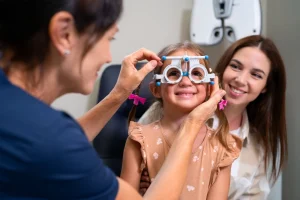
Early diagnosis is key to successful treatment of lazy eyes. The American Optometric Association recommends that children have their first eye exam at 6 months of age, another at age 3, and again before starting school [Source: https://www.aoa.org/healthy-eyes/eye-health-for-life/infant-vision?sso=y].
Treatment options for lazy eye may include:
- Corrective Lenses: Glasses or contact lenses can help correct refractive errors and improve vision in the weaker eye.
- Eye Patching: Covering the stronger eye with a patch forces the weaker eye to work harder, potentially improving its vision over time.
- Atropine Eye Drops: These drops blur vision in the stronger eye, encouraging the use of the weaker eye.
- Vision Therapy: Specialized exercises and activities can help improve visual skills and eye coordination.
- Surgery: In some cases, particularly for strabismus, surgery may be recommended to correct eye alignment.
- Digital Therapy: Recent advancements in technology have led to the development of digital therapies for lazy eye. A study published in “JAMA Ophthalmology” found that a binocular iPad game was effective in improving visual acuity in children with amblyopia [Source: https://jamanetwork.com/journals/jamaophthalmology/fullarticle/2474372].
Prevention and Long-term Outlook
While not all cases of lazy eye can be prevented, early detection and treatment significantly improve the chances of successful outcomes. Parents should be vigilant about their children’s eye health and schedule regular eye exams.
For adults with lazy eye, it’s never too late to seek treatment. While the condition is most responsive to treatment in childhood, studies have shown that improvement is possible even in adulthood with appropriate interventions.
A lazy eye is a complex condition with multiple potential causes. Understanding these causes, recognizing symptoms, and seeking early treatment are crucial steps in managing this disorder. By staying informed and proactive about eye health, we can work towards better vision outcomes for both children and adults affected by lazy eye.
Despite appropriate treatment, lazy eye can often recur. To help prevent this, schedule regular eye exams with your Calgary optometrist.



 587-353-5061
 1 (587) 409-1700